
20/10/2026 12:09
Does the Counter QR Open the Right Channel? Telegram QR Cards for Cambodian Tea Shops
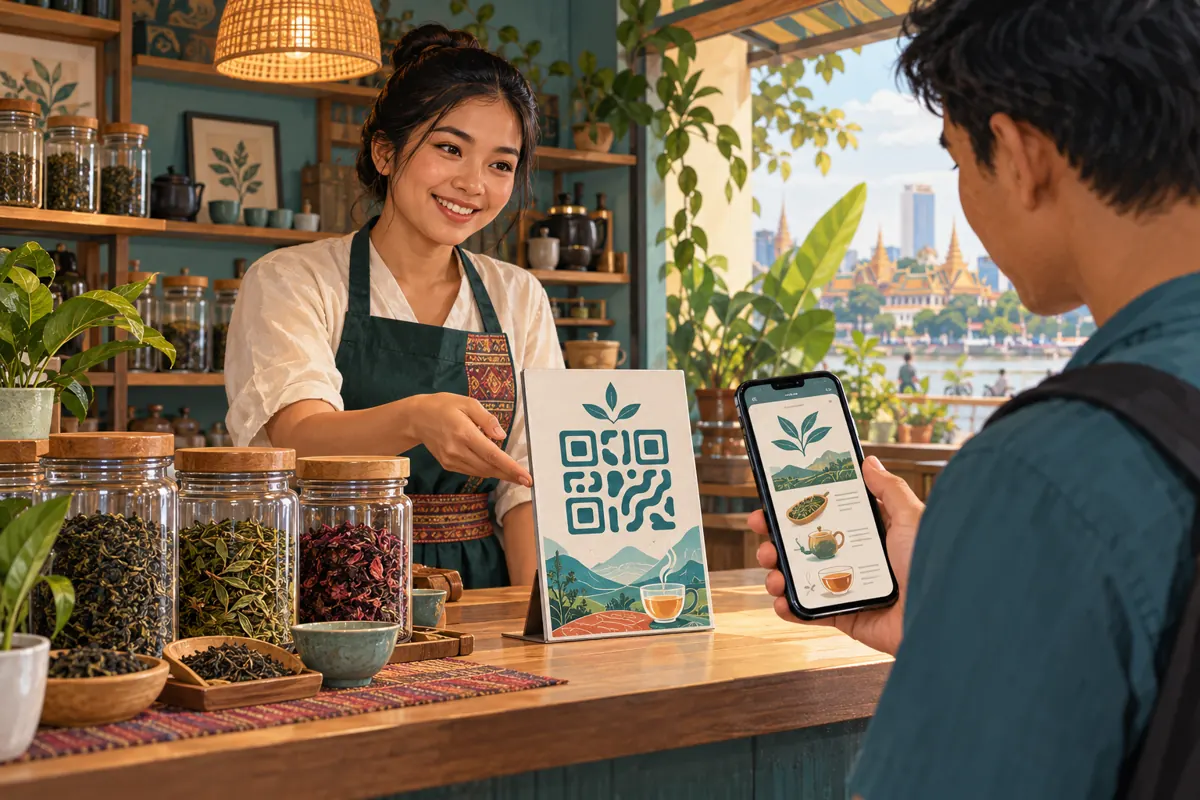
A customer buys loose-leaf tea, asks how to prepare it at home, and notices a small Telegram card beside the collection counter. That card can connect a useful shop conversation with a brewing guide the customer can revisit. It can also cause confusion if it opens a staff member’s account, sits among payment codes, or promises instructions that are difficult to find. For Cambodian tea businesses considering social media promotion or SMM panel services, this physical-to-digital handoff deserves attention before any spending. The practical goal is a working, clearly explained route to useful content, with evidence that distinguishes customer activity from purchased engagement.
1. Give the card one specific job
Start with the question a customer should be able to answer after scanning. For a tea shop, that might be how to prepare the particular loose-leaf blend sold at the counter. A card promising brewing guidance has a clearer purpose than one asking vaguely for support. Decide whether the intended destination contains ongoing shop updates or one specific instruction. This workflow uses a public Telegram channel intended for continuing customer education.
In a hypothetical Phnom Penh shop, staff repeatedly explain the difference between preparing a concentrated brew and a lighter cup. The owner creates a short visual guide using the shop’s actual products. The counter card invites customers to find those instructions on Telegram. This is an illustrative scenario, not a customer success story. Its usefulness depends on whether shoppers reach and understand the guide, not whether the channel appears busy.
2. Confirm the destination before designing anything
Telegram’s Channels FAQ explains that public channels have usernames and can be found through search. Its QR announcement documents codes for public usernames, including channels. Open the intended channel’s information page and inspect its identity before creating artwork. Compare the displayed name, username, profile image and recent content with the business information customers already recognize. Similar names are insufficient: check the actual destination.
Write a short internal destination record containing the approved channel link, the person responsible for it and the purpose of the printed card. Keep a staff member’s personal contact separate from the channel destination. If another branch has its own channel, settle which branch the card represents before printing. A customer should not need to infer whether a brewing guide, stock notice or collection instruction belongs to a different shop.
3. Generate the channel code and preserve its integrity
Telegram’s official QR guidance describes opening the QR control beside a username or from a chat’s information page, selecting an appearance, and printing or sharing the result. Interface placement can vary, so confirm the channel identity in the app you actually use. Generate the card’s code from that approved destination and retain an untouched copy of the exported image for future design revisions.
Build the printed layout around the code instead of decorating over it. Leave generous clear space, avoid stretching it, and keep illustrations away from its edges. Prefer a simple appearance that survives an ordinary print proof. Place the readable channel username beneath it as a fallback and identity check. The illustrations accompanying this article contain nonfunctional motifs for explanation; they are not production QR assets and must not be reused as working codes.
4. Make the invitation visibly different from payment
Where a Cambodian shop already displays payment QR cards, a second code needs an unmistakable purpose. Put the Telegram invitation in a separate holder near the tea guidance or collection area. Use a direct heading that identifies Telegram and the benefit, such as brewing instructions. Avoid a bare code with only a shop logo, which leaves customers to guess what scanning will do.
For a primarily Khmer-speaking customer base, have a fluent reviewer prepare and check the printed invitation in Khmer. Add another language only when it serves the shop’s actual visitors. Keep the message brief enough to read while holding a purchase. Staff should explain that it opens the shop’s information channel and that following is optional. Do not make access to basic preparation instructions depend on a customer demonstrating that they joined.
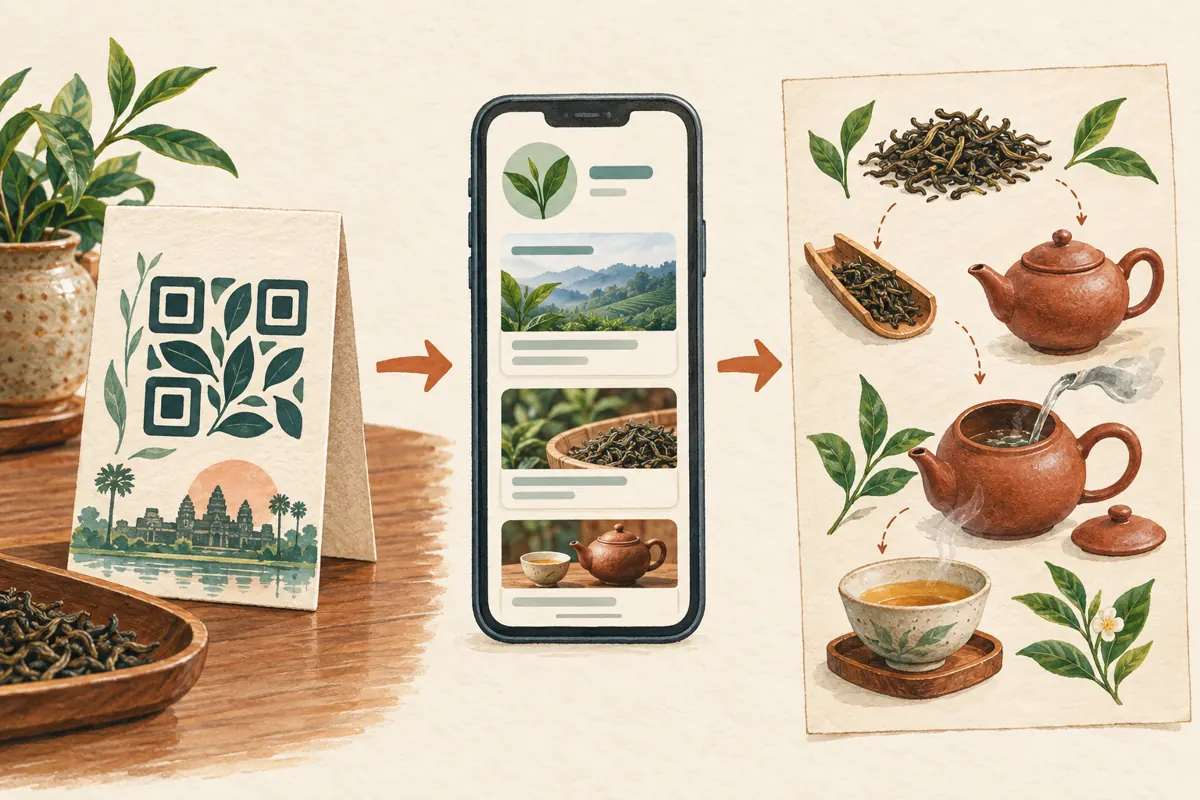
5. Test the printed card where customers will use it
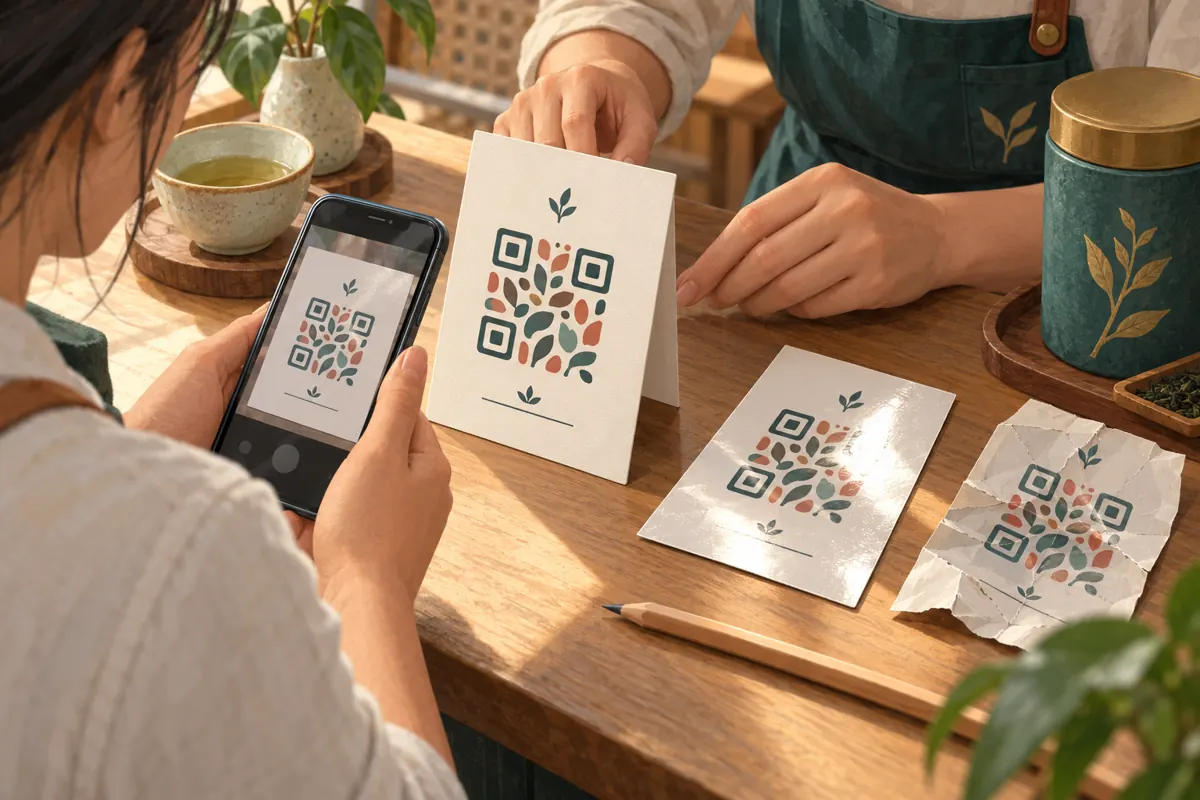
An image that scans from a designer’s screen has not passed a counter test. Print one proof at the intended size and place it in the actual holder. Check it under ordinary daytime and evening lighting, including reflections from any protective cover. Try scanning from the customer’s side without moving equipment or leaning over the counter. If it fails, adjust size, contrast or placement before ordering more copies.
Use more than one available phone when practical, including a device that is not used to administer the channel. Record what happens: code recognized, link offered, destination opened, guide located. These are separate checkpoints. A successful scan can still lead to an unexpected account or a confusing landing experience. When recognition works but opening stalls, investigate connectivity or the device’s app handoff before assuming the printed pattern needs redesigning.
6. Deliver the promised guide immediately
Treat the first visit as a continuation of the counter conversation. Make the brewing guide easy to locate from the channel’s current content. Show the tea packet customers recognize and explain which product the instructions cover. Distinguish the shop’s suggested preparation from a universal rule for every tea. Avoid burying the answer beneath unrelated offers, supplier announcements or repeated promotional graphics.
Give readers enough context to act: the equipment shown, the preparation sequence and how to ask a follow-up question through the shop’s stated contact route. If the guide refers to measurements, use consistent units and show the relevant utensil clearly. Have a colleague unfamiliar with the draft follow it. Their task is to identify missing information, such as whether an instruction describes one cup or a larger pot, before customers encounter the ambiguity.
7. Run a small placement trial with a clear decision
In a hypothetical trial, the shop places a single card near the tea collection point and asks staff to note recurring difficulties. One customer may assume it is a payment code; another may open the channel but ask where the guide is. Those observations lead to different fixes. The first suggests changing the label or location. The second suggests improving the destination. Neither problem is solved by increasing a post’s visible views.
Choose a review date and decide in advance what would justify keeping, moving or redesigning the card. Useful criteria include reliable scanning, correct destination recognition and fewer unresolved questions about finding the instructions. Avoid changing the wording, holder, location and guide simultaneously if you want to understand a particular improvement. Record the change being tested and any unusual conditions, such as temporary counter rearrangement, that could affect your interpretation.
8. Keep SMM panel services outside the scan test
The supplied pay-smm.com catalogue includes the exact public name “Telegram - Post Views ~ 1 post ~ 𝐍𝐎 𝗥𝗘𝗙𝗜𝗟𝗟 ~ 100k/days ~ INSTANT”. The title identifies a single-post views service. Its description is empty, so the catalogue data does not substantiate audience origin, user authenticity, delivery speed or business outcomes. Treat timing and volume wording as listing claims that require clarification, not verified promises.
That service does not test a printed code, establish that someone visited the counter, or confirm that a brewing guide was understood. Purchased engagement is not evidence of genuine interest, sales, ad delivery or Cambodian users. If the business considers a panel request, review applicable platform rules and the available service terms first. Decline any proposal to present bought activity as customer approval, and preserve any service record separately from the QR trial.
9. Measure observations without inventing attribution
Telegram states that channel post views are approximate and include views of forwarded copies. They therefore cannot serve as a count of unique counter-card visitors. A rising number beside the brewing post does not establish that the printed card caused the increase. Even without an SMM order, readers may arrive through other routes. With purchased views involved, interpreting the total as customer response becomes still less defensible.
Maintain three distinct notes: physical card checks, any promotion or service activity, and actual customer questions. For customer feedback, an optional question such as how they found the guide can provide context, but answers remain self-reported. Record only what is necessary to improve the experience. A question about buying the same tea again is worth following up, yet it should not be reported as a completed sale unless a purchase actually occurs.
10. Prevent stale cards and misleading conclusions
Give one person responsibility for checking the card after changes to the channel username, branding, branch arrangements or printed design. A printed pattern does not update itself when business details change. Scan a physical copy again and verify both the destination and the promise on the card. Remove obsolete copies from counter holders, takeaway inserts and any other places where staff distributed them.
Common mistakes include printing a large batch before testing, approving only the digital artwork, and treating a familiar profile image as proof of the correct destination. Another is leaving a perfectly scannable card in place after the promised guide becomes outdated. Keep a simple inventory of placements and the current approved design. When the card works but customers still struggle, revise the content or explanation before spending on more promotion.

Frequently asked questions
Should the card open the channel or one brewing post?
Match the destination to the invitation. A channel card suits an ongoing resource containing several guides and shop updates. If the printed promise concerns one exact guide, the visitor should reach that guide with minimal searching. This article’s workflow uses the channel’s public-username QR. Do not describe it as opening a particular post unless you have tested a code that actually does so.
Does the Telegram QR card show how many people scanned it?
Do not assume that it provides scan reporting. The official QR announcement describes generating and sharing codes, not an attribution dashboard. A post-view total is a different measurement. For a simple shop trial, document scanning problems and voluntary customer feedback instead of relabelling channel activity as scans. Leave the number of scans unknown when you have no reliable measurement.
What if a customer cannot open Telegram?
Keep the essential brewing instructions available through another practical route, such as a printed preparation card or a brief staff explanation. The Telegram card should add convenience rather than become a barrier to using a purchase. Do not promise an identical opening experience on every device; test the devices available to your team and explain any limitations honestly.
Should we buy views before displaying the card?
Views are unnecessary for checking whether the card works or the guide helps. Prioritize a correct destination, readable instructions and reliable print quality. Buying views would not demonstrate local demand or make a weak guide clearer. If a separate panel service is considered, evaluate its terms independently and never use the resulting count as proof that counter visitors engaged.
Explore the current service catalogue, create an account, or ask a specific question through support tickets.
- Telegram: Reactions, Spoilers, Translation and QR Codes — Themed QR Codes
- Telegram Channels FAQ — Public Channels and Post View Counters
Prepared with AI assistance. Illustrations explain the workflow and do not represent customer results.