
20/10/2026 15:26
Apron Only or Full Uniform? Telegram Captions Above Photos for Cambodian Workwear Shops
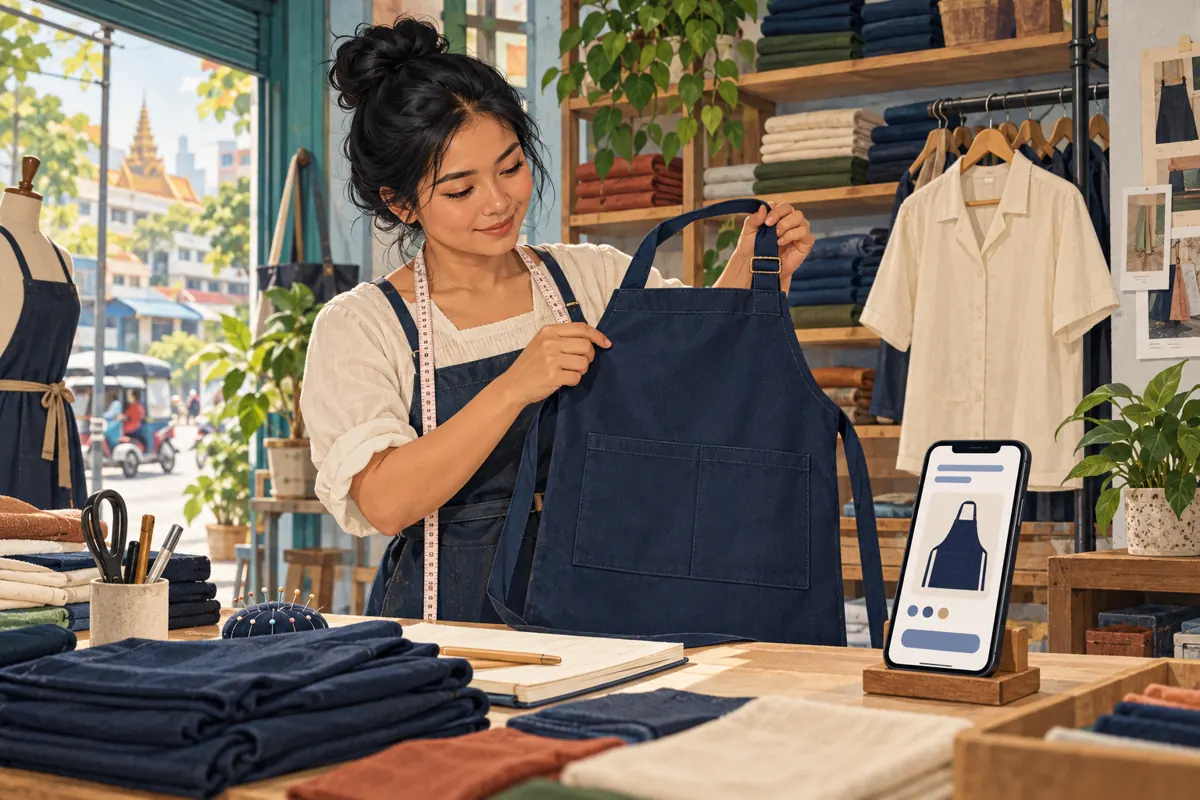
A styled product photograph can promise more than the seller intends. An apron worn over a shirt, paired with a cap and embroidered with a sample logo may look like a complete uniform package. If the offer covers only the plain apron, that distinction should be easy to find before someone asks for a quote. For Cambodian workwear shops serving cafés, food stalls and small hospitality teams, Telegram’s option to place captions above media offers a practical way to introduce the photograph. The useful question is not whether every caption belongs on top. It is whether the buyer needs a specific fact before interpreting the picture. Establish that meaning before spending time or money promoting the post.
1. Identify the assumption the photograph could create
Start with the image, without reading its draft caption. List what a new buyer could reasonably think is included: apron, shirt, cap, embroidery, packaging or a set of matching garments. Then compare that list with the actual offer. Any difference is a communication problem to solve. A technically accurate caption can still leave readers confused if its most important qualification appears after a long introduction.
Consider a hypothetical Phnom Penh supplier photographing a navy apron over a cream shirt. The shirt demonstrates the appearance of a café uniform, but the supplier is offering the apron separately. The opening should establish that boundary immediately. This is particularly useful when the same shop also sells complete uniforms elsewhere in its channel. Familiar customers may know the difference; a person encountering one promotional post may not.
2. Decide whether the caption should lead
Put the caption first when a condition changes the meaning of the image. Examples include an apron sold individually, embroidery quoted separately, a photographed colour available only by order, or a sample that demonstrates styling rather than current stock. The opening becomes an instruction for interpreting the photograph. It should answer the likely misunderstanding before adding descriptive language.
An image can lead when it already communicates the offer clearly and the caption provides supporting detail. A plain apron photographed alone may need less explanation than a fully dressed model. Neither arrangement is automatically better for every post. Use the amount of interpretation required as the deciding factor. Moving a vague sentence above the picture does not make it informative, and a long block of text can delay the product view unnecessarily.
3. Move the caption using Telegram’s media controls
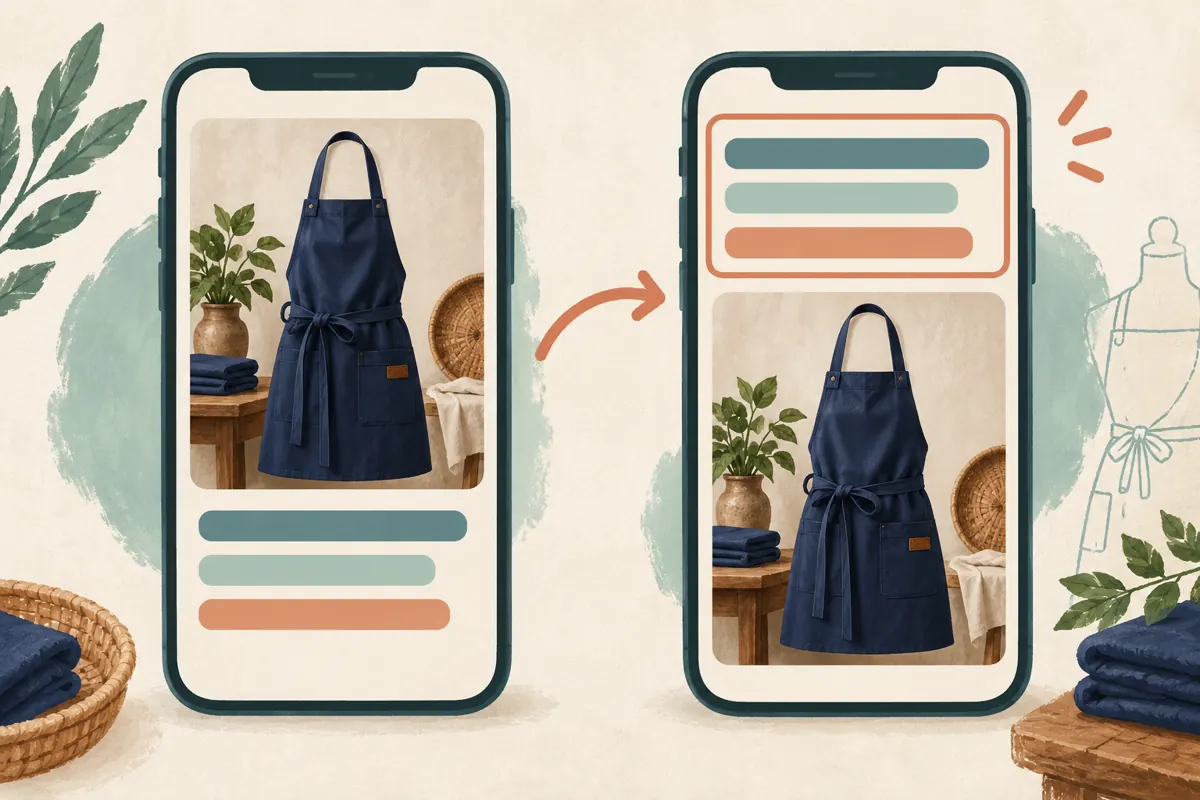
Telegram documents the following workflow: choose the media from the attachment menu, enter its caption, hold the Send arrow, and select Move Caption Up. For existing media or albums, its guidance describes editing the message, holding Save, and choosing the caption-position option. Check the resulting preview before sending or saving. These instructions come from Telegram’s official feature announcement, [Message Effects, Hashtag Search, and More](https://telegram.org/blog/message-effects-and-more).
Practise with a draft in a shop-controlled test conversation before changing a public offer. Select the actual photograph and the intended caption so the preview represents the real post. If the control is not visible in your app, check the app version and available menu rather than repeatedly pressing Send. Keep a copy of the approved wording while resolving the interface issue. The important outcome is a readable offer, not completing a particular gesture.
4. Write the opening around the sale unit
Use a short opening that identifies the item and its sale unit. In the hypothetical example, a suitable start is: Navy bib apron, sold individually. Shirt and cap are styling props; embroidery is quoted separately. The next sentence can describe the verified fabric or pocket arrangement. Finish with the information needed for an enquiry. This order gives a reader the offer boundary, relevant detail and next action without burying the distinction.
If a price is published, state its currency and whether it applies per apron or per set. If the price depends on quantity or customisation, explain what the shop needs to prepare a quote. Avoid a headline price that quietly excludes the version shown in the image. For a Khmer-speaking customer base, prepare and review the customer-facing wording in Khmer. Keep product codes consistent across languages so staff can identify the same garment.
5. Make the photograph support the qualification
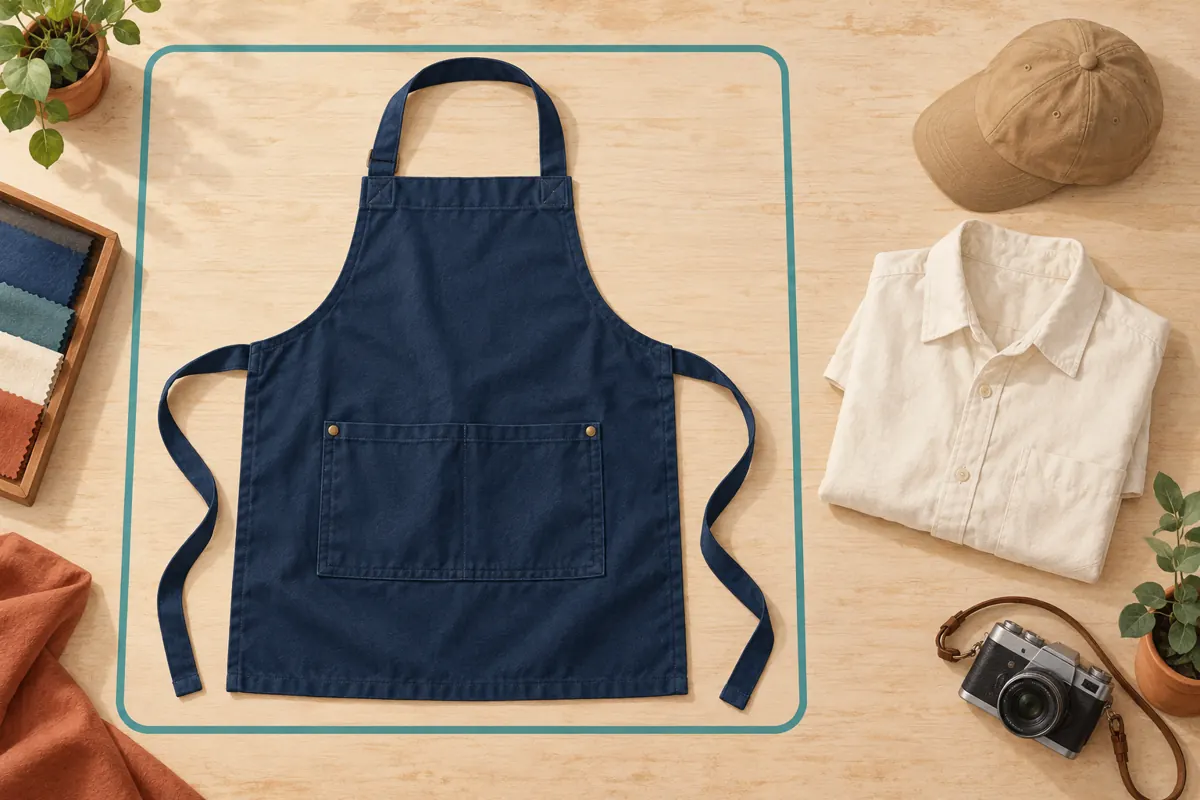
Caption placement should reinforce honest photography. If the apron is the item for sale, give it visual priority. Include a clear view of its shape, straps and pockets. A styled image can help buyers imagine use, but a second view of the apron alone may resolve uncertainty more effectively than another paragraph. Remove unrelated accessories if they continue to dominate the composition.
Treat sample embroidery carefully. A logo on the photographed apron may suggest that decoration is included or that the seller has supplied the named business. Use material you have permission to show, explain whether the pictured decoration is a sample, and avoid presenting it as customer proof. For the hypothetical workwear offer, an undecorated apron is the simplest first photograph. Discuss custom artwork later, once the buyer has asked about that option.
6. Run a comprehension check before promotion
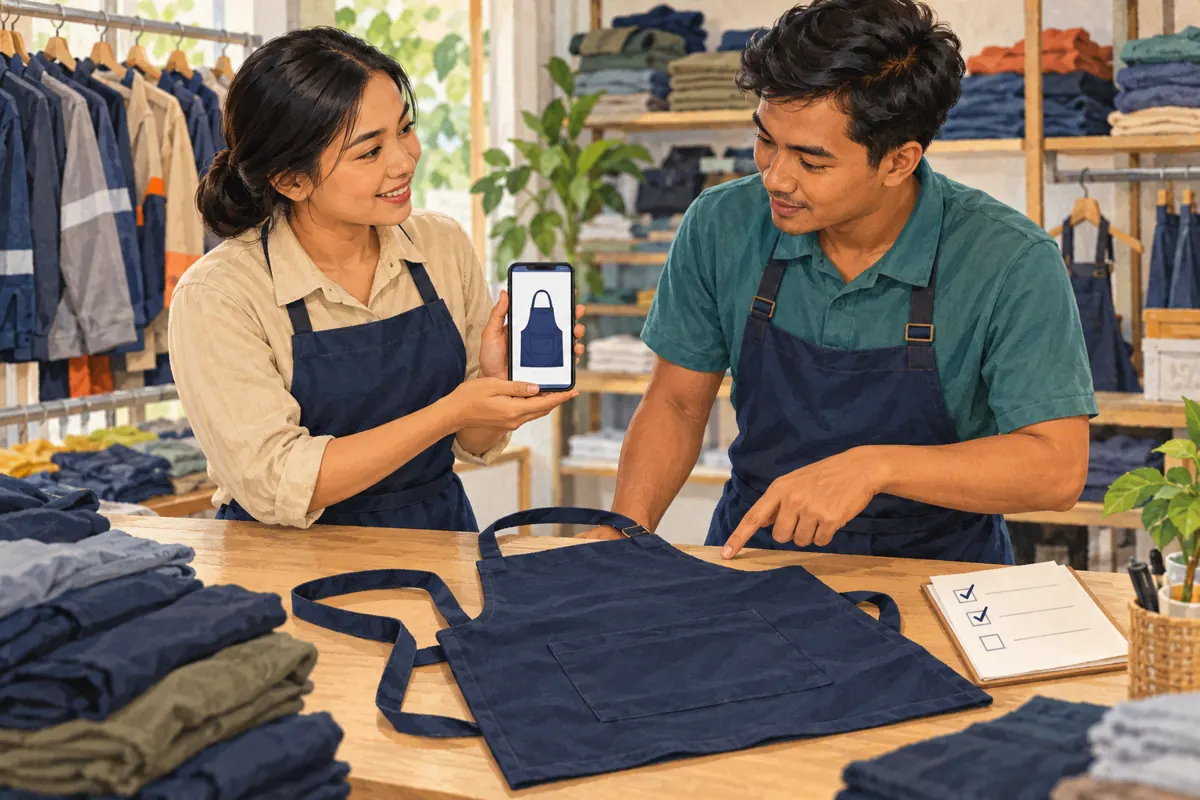
Show the draft to someone who did not prepare it. Ask them to explain what they would receive, whether decoration is included, and what they should send to request a quote. Do not coach them with questions such as whether the words apron only are obvious. A useful check allows the person to reveal their own interpretation before you explain the intended offer.
If they expect a complete uniform, identify why. Perhaps the photograph dominates the message, the opening uses the ambiguous word set, or the exclusion appears too late. Change the element responsible and repeat the check. Keep a brief note of the misunderstanding and revision. This is a practical editorial review, not proof that all customers will understand. Check on an ordinary phone as well as the larger screen used to prepare the content.
7. Make the next message useful for both sides
A clear post should lead to a manageable enquiry. Ask for the apron reference, desired quantity, colour and whether embroidery is needed. Request the delivery area if it affects the quote, while leaving a full address for the appropriate private order conversation. Avoid requiring personal details merely to explain the product. The customer should understand why each requested detail matters.
For a hypothetical Siem Reap café enquiry, the staff member can first confirm that the request concerns aprons rather than complete uniforms. They can then discuss decoration and availability before preparing the quote. Use the same product wording in the reply that appeared in the caption. If the post says embroidery is separate but the reply calls everything a package, the shop has reintroduced the uncertainty that the improved layout was meant to remove.
8. Keep the SMM service decision separate
The supplied pay-smm.com catalogue includes the exact public service name Telegram - Post Views ~ 1 post ~ 𝐍𝐎 𝗥𝗘𝗙𝗜𝗟𝗟 ~ 100k/days ~ INSTANT. Its title identifies a post-view service, but the supplied description is empty. The title’s speed and refill wording should not be treated as independently verified delivery terms. There is no supplied basis for claiming Cambodian viewers, genuine buying interest or an official Telegram partnership.
Before considering such a service, establish what you want to learn. Purchased views cannot demonstrate that buyers understood the sale unit, wanted the apron or accepted a quote. They are also not evidence of ad delivery or Cambodian users. If your objective is comprehension, use the reader check. If your objective is sales, follow actual enquiries and confirmed orders. A panel counter cannot replace either process, and declining an unsuitable service is a valid decision.
9. Review questions without treating views as customers
Telegram states that channel view totals include views of forwarded copies and are approximate. Its explanation also allows for a person being counted again after a period of time. A post’s counter therefore should not be described as a count of distinct local buyers. See Telegram’s [Channels FAQ](https://telegram.org/faq_channels). Record any purchased activity separately so it does not disappear into a report about customer response.
Review the substance of enquiries instead. Separate questions about what is included from questions about sizing, stock, decoration and delivery. Repeated requests for the shirt may show that the offer boundary remains unclear. Questions about apron measurements suggest a different information need. Neither category proves a sale. Record quote requests and confirmed purchases separately, and avoid attributing a change to caption placement when the photograph, product availability and promotion also changed.
10. Avoid layout fixes that create new confusion
Do not move every detail to the top simply because the feature allows it. A dense opening can obscure the main distinction. Do not rely on colour alone to identify variants, especially when similar navy and black garments appear together. Do not label a product ready stock unless someone has checked availability. These mistakes concern the offer itself; rearranging the caption will not correct them.
Keep one approved version of the product wording for the person preparing posts and the person answering enquiries. When the sale changes from a single apron to a genuine bundle, review the image, caption and reply wording together. If an earlier customer received different information, address that difference in the conversation. The repeatable workflow is to define the offer, choose the reading order, verify comprehension and then decide how to promote it.
Frequently asked questions
Will placing the caption above the photograph increase sales?
There is no guaranteed sales effect. It can make an important qualification easier to encounter, which is a reasonable editorial purpose. Evaluate whether readers understand the offer and whether staff receive useful enquiries. Price, product suitability, availability and response quality still affect purchasing decisions. A higher view counter alone cannot establish that the layout helped.
Should the shop remove all styled uniform photographs?
No. Styling can help customers imagine an apron in use. The issue is whether the picture and wording create an accurate expectation. Make the sale item prominent, identify excluded accessories early, and consider an additional photograph of the apron alone. If readers still expect a bundle, simplify the image instead of adding increasingly long exclusions.
What if the caption becomes too long in two languages?
Give the main customer language priority and preserve the same essential facts in each version. Shorten decorative introductions before removing the sale unit or exclusions. Keep product codes identical, and have someone review the translation for commercial meaning. A concise bilingual explanation is more useful than two long promotional passages that describe different offers.
Can SMM post views tell us whether Cambodian café owners understood the offer?
No. The supplied service information does not establish audience location, occupation or comprehension. Purchased engagement is not evidence of genuine interest. Ask readers to explain the offer, review relevant voluntary enquiries and confirm order details directly. Do not describe a purchased counter increase as local demand or use it as customer proof.
What should staff do if a buyer still asks whether the shirt is included?
Answer plainly and courteously before asking for order details. Explain the actual contents and offer a separate shirt quote only if that option exists. Record the wording or image that caused uncertainty. If the same misunderstanding recurs, revise the post and check it again rather than assuming customers simply failed to read.
Explore the current service catalogue, create an account, or ask a specific question through support tickets.
- Telegram: Message Effects, Hashtag Search, and More — Captions Above Media
- Telegram Channels FAQ — What does the eye icon mean?
Prepared with AI assistance. Illustrations explain the workflow and do not represent customer results.