
19/10/2026 13:24
Find the Right Shoe-Care Demo: A TikTok Playlist Workflow for Cambodian Shops
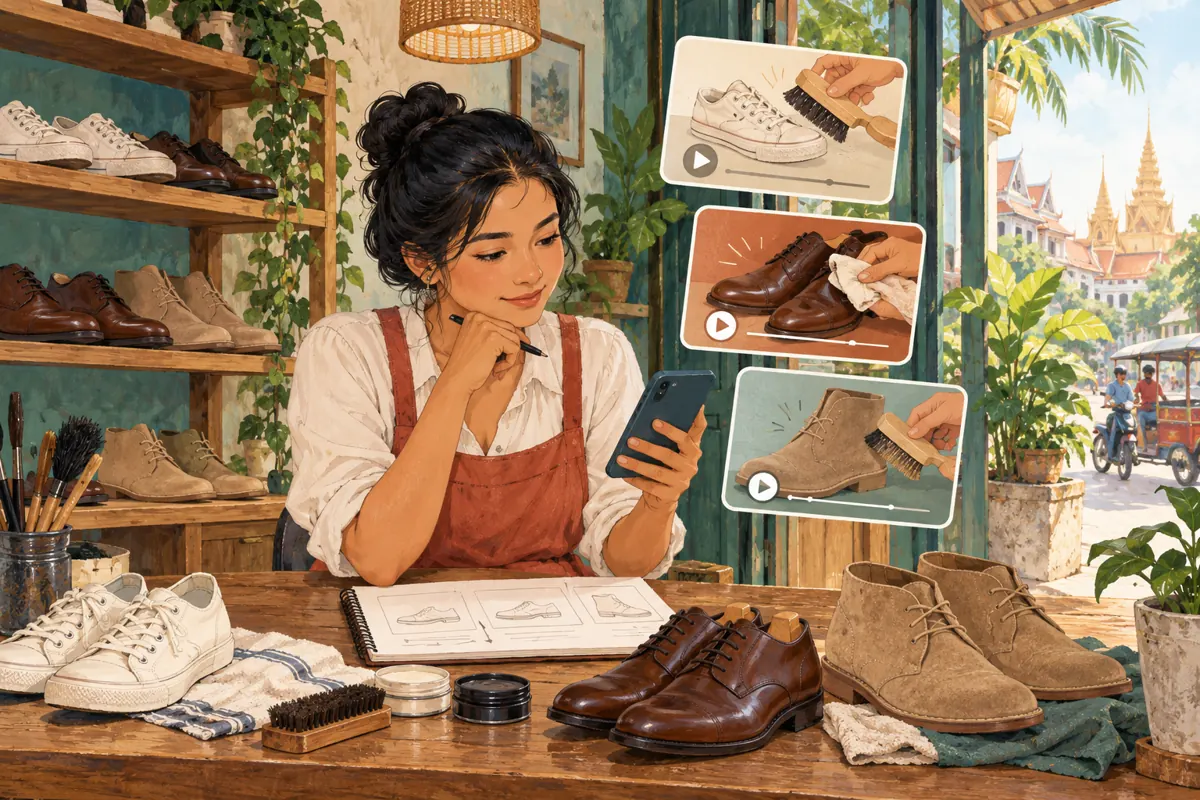
A customer remembers your shoe-cleaning video but cannot find it among product arrivals, holiday offers and shop updates. Posting another demonstration may add to the confusion. A better starting point is to organize the useful videos you already have around recognizable customer needs. This guide uses a hypothetical Cambodian shoe shop to explain how to plan TikTok playlists, review the clips inside them and test whether someone can find an appropriate answer. It also explains where SMM-panel decisions belong: purchased views cannot establish that a collection is useful, that viewers are Cambodian, or that anyone intends to buy.
1. Start with a retrieval problem
In this hypothetical example, a Phnom Penh shop sells canvas sneakers, leather shoes and suede footwear. Staff have filmed separate demonstrations, but customers keep asking which clip applies to their pair. The immediate objective is specific: help a visitor locate the relevant material and understand the limits of the demonstration. That objective gives the team something observable to improve.
Write down the questions staff hear at the counter before sorting videos. Examples might include identifying a material, choosing an appropriate care product, or recognizing when to ask the shop for help. These are planning prompts, not universal shoe-care instructions. The shop should verify every practical demonstration against the footwear and product manufacturers’ guidance.
Avoid starting with a target view count. More plays would not explain whether someone found the correct material. Begin with the task the viewer needs to complete, then decide whether a playlist is the right way to support it.
2. Check availability before promising a playlist
TikTok describes creator playlists as a way to categorize public videos so people can watch related content together. Its Help Center also notes that the feature is not available everywhere. Check what the shop’s account actually offers before recording an introduction that tells everyone to open a playlist. Do not assume that another Cambodian business having the feature means your account has it.
TikTok documents access to its creator tools through Profile, the menu and TikTok Studio. Review the tools available in your account and consult the current Playlists help entry for the applicable creation controls. Interfaces and availability can differ, so treat the visible account controls as a prerequisite rather than promising a universal button sequence.
If playlist controls are absent, continue the editorial work. Prepare clear individual videos and a staff reference list of their public links. Consistent topic names and recognizable opening frames can still help staff direct customers to the correct demonstration.
3. Group by material before grouping by campaign
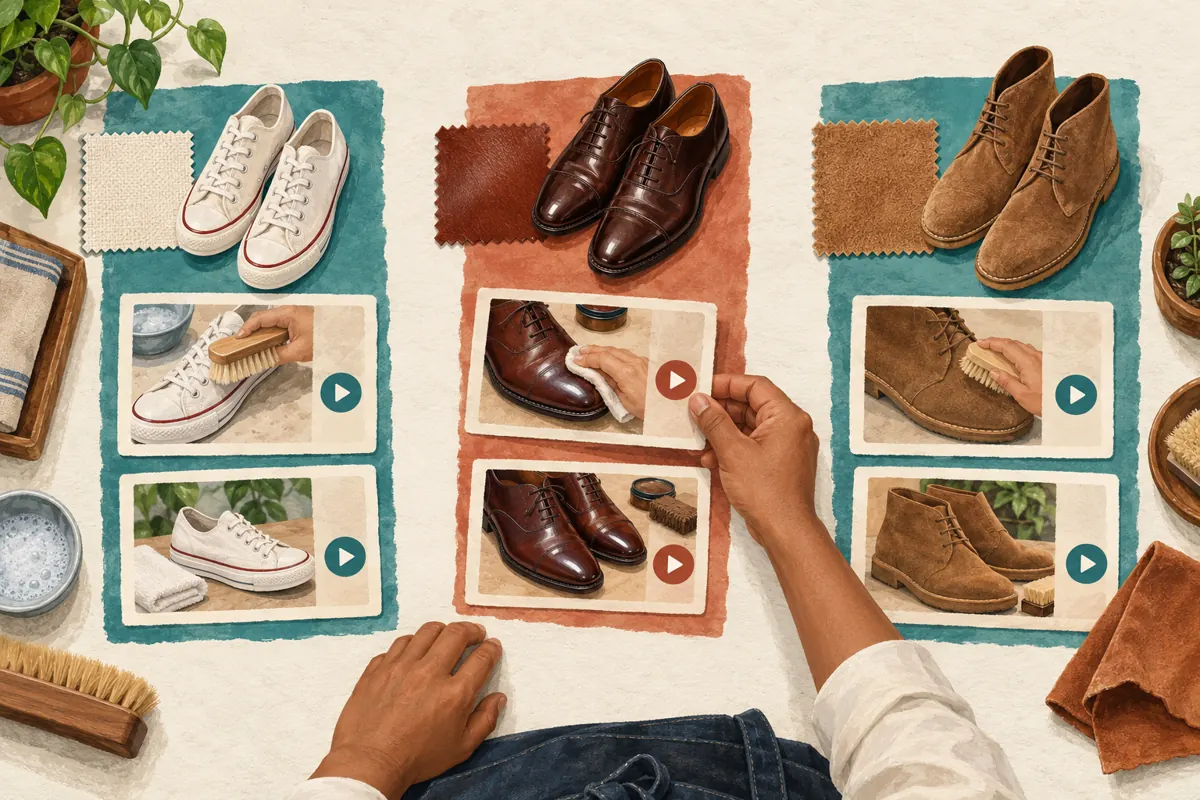
For the hypothetical shop, material is a useful first organizing principle because it affects which demonstration a viewer should consult. Candidate collection names could be Canvas Shoe Care, Leather Shoe Care and Suede Questions. These English names illustrate the structure; the shop should use customer-facing wording in the language its intended audience understands, including Khmer where appropriate.
Campaign labels such as New Arrivals or Weekend Offers answer a different question. They help describe what the business is promoting, but they may not help someone who already owns a pair and needs care information. Keep temporary sales messages out of an evergreen care collection unless they are essential to its purpose.
Give each proposed collection a one-sentence promise in the planning document. For example: this collection helps owners of the demonstrated canvas model locate its approved care guidance. If a video does not support that promise, leave it out instead of stretching the collection to accommodate everything.
4. Audit clips for context before adding them
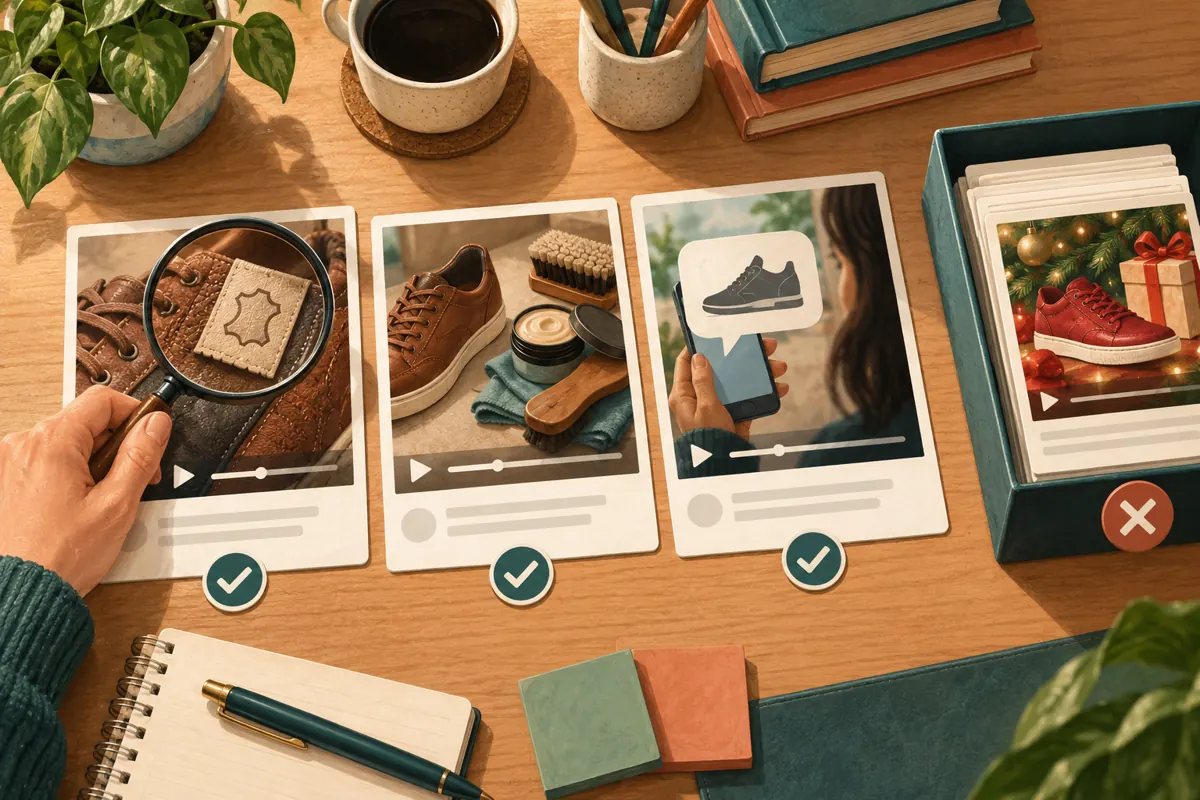
Watch every candidate video from beginning to end. Record the shoe shown, the material claimed, the care product used, the question answered and any limitation stated. A visually attractive demonstration may still be unsuitable if the product label is hidden or the speaker says only to use the same method as before. Organization cannot repair missing instructions inside a clip.
Separate current, complete demonstrations from clips needing revision. A useful review note might say: identifies the model clearly but does not explain which surface the product is intended for. That is more actionable than marking the video as low quality. Assign the correction to someone who understands the actual product rather than asking an editor to guess.
Review commercial details separately. An old discount, discontinued bottle or changed shop contact can distract from otherwise useful guidance. Decide whether to remake the clip, exclude it from the collection or provide an adequate correction using the controls currently available.
5. Design an order, but make every clip understandable alone
Plan the viewing sequence on paper before arranging the collection in the app. A practical editorial sequence starts with identifying the relevant shoe, continues with the verified demonstration and finishes with common uncertainties. This is a proposed teaching order, not a claim that every visitor will enter at the beginning or watch all the videos.
Each clip therefore needs its own context. Show the shoe clearly, identify the scope of the demonstration and state any essential restriction within that clip. Avoid an opening such as now apply this, because a viewer arriving directly has no reason to know what this means. A collection should make related explanations easier to find without making individual explanations dependent on hidden prerequisites.
When reviewing the available playlist controls, check the resulting order rather than assuming upload chronology matches the intended lesson. Revisit the collection after additions. The operational question is whether the visible sequence still makes sense to someone unfamiliar with the shop.
6. Give viewers a precise next action
A useful ending tells viewers what to do with the information. In a hypothetical suede demonstration, the shop could invite customers who are unsure of their material to send a clear shoe photo through its established enquiry channel. Staff should explain what they can assess from an image and when an in-person inspection is needed. Avoid implying that a quick message guarantees a diagnosis or result.
Keep the instruction tied to the current clip. Asking everyone to browse all the shop’s videos creates unnecessary work. Where the playlist is available and visible, refer to its exact customer-facing name. Where it is unavailable, staff can provide the specific public video link that answers the question.
For a Cambodian business serving different customer groups, test the wording with the people who answer enquiries. If staff use a Khmer material term while videos use an unfamiliar English label, agree on understandable wording before promoting the collection.
7. Run a small navigation test
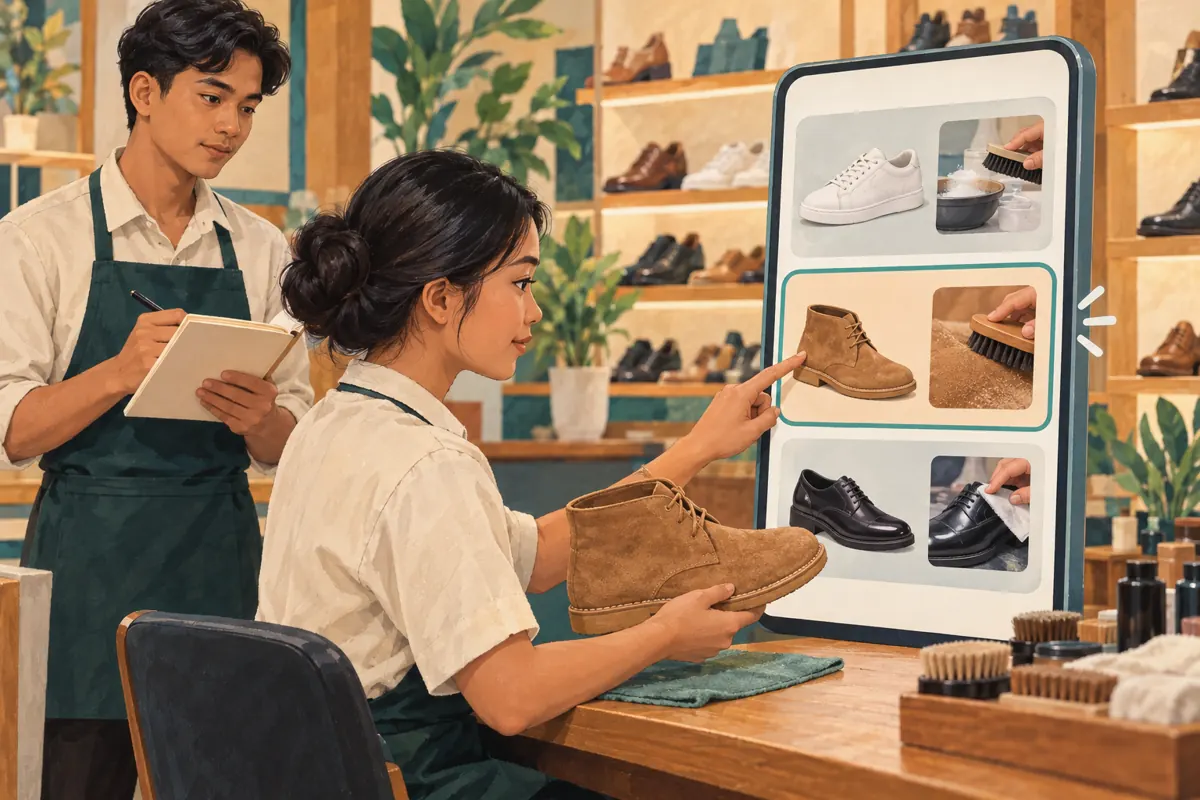
Ask a colleague who did not organize the videos to complete a concrete task on a phone. For this hypothetical exercise, give them a suede shoe and ask them to find the relevant explanation from the shop’s profile. Observe without pointing to the correct choice. This checks the organization rather than the colleague’s ability to follow your instructions.
Record where the person hesitates: unclear collection name, similar-looking covers, an opening that hides the material, or a missing answer after the video ends. Ask what they expected to find and what information would have helped them choose. Treat the observations as usability feedback from that exercise, not as a representative customer survey.
Fix the most consequential confusion first and repeat the same task. If the colleague still chooses a leather demonstration for the suede shoe, adding more videos is unlikely to solve the underlying labeling problem. Improve the distinction before expanding the collection.
8. Put the SMM-panel decision behind the usefulness check
The supplied pay-smm.com catalogue includes the exact public title TikTok - Video Views ~ Max Unlimited ~ 10M/Days ~ Instant ~ 𝐍𝐎 𝗥𝗘𝗙𝗜𝗟𝗟. Its title identifies a video-view service. No supporting description was supplied, so the title’s timing, quantity and refill wording should not be treated here as independently verified delivery terms.
That listing does not establish a playlist-management service, Cambodian targeting, genuine interested viewers or official TikTok affiliation. Buying views would not organize the collection, correct a misleading demonstration or show that customers understood it. It also would not establish sales, advertising delivery or a reliable comparison between competing care topics.
TikTok’s Integrity and Authenticity rules prohibit services that artificially increase engagement and describe enforcement against inflated signals. For this workflow, do not purchase artificial engagement. Direct the available budget toward correcting demonstrations, improving filming or answering real enquiries. A catalogue listing is something to evaluate critically, not a reason to bypass platform rules.
9. Review questions and analytics without inventing causation
TikTok Studio provides content-management and analytics tools, although available features vary. Use the information actually shown for the account, and keep the interpretation modest. An increase in a video’s views does not reveal whether people found it through the playlist, understood the instructions or visited the shop because of it.
Maintain a short question log alongside the content list. Record the topic, the relevant video and the missing information, without collecting unnecessary personal details. A hypothetical note might say that someone found the leather collection but could not tell whether the demonstrated product suited their shoe’s finish. That suggests a content gap even if the clip attracts attention.
Compare like questions over a sensible review period, while noting changes such as new stock, a revised caption or a separate promotion. If purchased engagement has already affected a video, record that limitation. Do not use its total view count as evidence that the material category is popular with Cambodian buyers.
10. Keep the collection useful as products change
Assign one staff member to review the collection when a demonstrated product changes, a supplier updates instructions or repeated questions reveal confusion. The review should check the videos themselves, the collection’s organization and the directions staff give customers. A neatly named playlist can still become misleading if an old demonstration no longer matches the bottle on the shelf.
Common mistakes include adding unrelated sale clips, using nearly identical covers, burying the material name and assuming viewers watched an earlier installment. Another mistake is treating a larger collection as automatically better. Add a video when it answers a distinct unresolved question, not simply because it exists.
Keep a brief internal record of why a clip was included or removed from the plan. That makes future decisions easier when another employee takes over. The collection’s purpose remains practical: help people locate relevant guidance and recognize when they need a more specific answer.
Frequently asked questions
Should we wait for playlists before improving our videos?
No. Audit and label the videos now, and maintain a staff list of the relevant public links. Those improvements remain useful even without playlists. Avoid filming directions to a feature that viewers cannot access on the shop’s account.
Should Khmer and English demonstrations share a collection?
Choose based on the customer task and how clearly viewers can identify each clip’s language. If mixed-language videos make navigation confusing, plan clearer language distinctions. Do not create separate collections merely for appearance; first check whether each would contain enough useful, current material.
Can extra panel views unlock the playlist feature?
The official material reviewed does not establish that purchased views unlock playlists. Do not infer eligibility from a panel listing or another account’s experience. Check the account’s available controls and TikTok’s current help guidance, and do not buy artificial engagement to pursue access.
What if one demonstration could fit several topics?
Choose the primary question it answers and record that decision in the content plan. Staff can still share its individual public link for a relevant enquiry. Avoid posting duplicate versions solely to fill categories; film another explanation only when it adds a meaningful distinction.
How will we know whether the organization helped?
Look for observable improvements in navigation tests and more specific follow-up questions. Keep those findings separate from analytics totals. They can show that a particular viewing task became clearer, but they do not prove increased sales or establish how every customer discovered the shop.
Explore the current service catalogue, create an account, or ask a specific question through support tickets.
- TikTok Help Center: Playlist overview and availability in official search results
- TikTok Help Center: Tools for creators
- TikTok Help Center: TikTok Studio
- TikTok Community Guidelines: Integrity and Authenticity
Prepared with AI assistance. Illustrations explain the workflow and do not represent customer results.