
21/10/2026 09:16
Repair Request or AI Guess? TikTok Comment Insights for Cambodian Zipper-Repair Shops

A zipper-repair video can attract several different conversations at once. Someone wants a replacement pull tab, another asks whether the shop accepts bags, and someone else simply enjoys watching the repair. Treating all those comments as demand for the same service can produce an unhelpful follow-up video. For Cambodian repair businesses, the challenge becomes more specific when viewers mix Khmer, English part names and informal spelling. TikTok comment insights can provide a starting point where available. This workflow explains how to check those summaries against actual comments, choose a useful demonstration and keep SMM-panel activity from being mistaken for customer evidence.
Start with a repair decision the comments could inform
Choose one decision before opening analytics: what should the next demonstration explain? A narrow question such as whether customers confuse a pull tab with the whole slider gives the review a purpose. A broad instruction to discover what the audience likes encourages vague conclusions that are difficult to film or verify.
Consider a hypothetical Phnom Penh shop that repairs jacket and bag zippers. Its latest clip shows a slider moving along a sample zipper. The owner wants the next video to help viewers describe their problem before visiting. The useful evidence is therefore wording about missing parts, separation, jamming or damaged fabric. Compliments about the filming can remain positive feedback without becoming repair requests.
Write the decision at the top of the review note. This keeps the person reading comments and the person filming the demonstration focused on the same customer problem.
Find comment insights, then use a manual fallback if necessary
TikTok describes comment insights as an AI feature that summarizes and groups comments into categories, including topics and questions. Its support documentation says availability is limited and users must be at least 18. Do not assume every Cambodian account has access.
For your own post in the TikTok app, open Profile, select the post, tap More insights or More data, choose Engagement, then select a topic below Comments. Treat the resulting grouping as a navigation aid.
If the feature is absent, read the comments directly and make a small manual list. Record the post, review date, question and proposed response. The business decision does not depend on gaining access to a particular screen. With a short conversation, direct reading may be the most practical route anyway. Avoid spending the review session hunting for a feature instead of answering a clear customer question.
Check the original conversation behind each useful topic
A topic label leaves out detail. Before acting on it, read the underlying comment and nearby replies. Identify what the person actually asked, which object they meant and whether the shop already answered. Keep the original meaning separate from your interpretation.
In a hypothetical review, a group of comments appears to concern replacement parts. One viewer asks about replacing only a pull tab, while another describes teeth separating after the slider passes. Those comments should not automatically become one promise that a small replacement will solve both problems. The shop must inspect each item before deciding what work is appropriate.
Use a simple evidence note: original question, likely meaning, uncertainty and next action. If you cannot explain why a comment belongs in a topic, mark it unresolved. That is more useful than forcing it into a category merely to finish the review.
Review Khmer meaning before assigning customer intent
Ask a staff member who understands the customer's wording to check ambiguous comments. A viewer may describe a zipper part by its function rather than its technical name. Mixed-language wording can also refer to the material, the garment or the part being moved. Do not assume that a familiar English word settles the meaning of the whole sentence.
Pay particular attention to negatives, comparisons and references to earlier replies. A hypothetical comment meaning that a viewer does not need the whole zipper replaced could be mishandled if the reviewer notices only the replacement terminology. This is a review risk, not a claim about a measured error rate in TikTok's system.
When necessary, ask a focused clarification: is the pull tab missing, or does the zipper separate after closing? Offer understandable choices without diagnosing the repair from a short sentence. Keep addresses and contact details out of the public clarification.
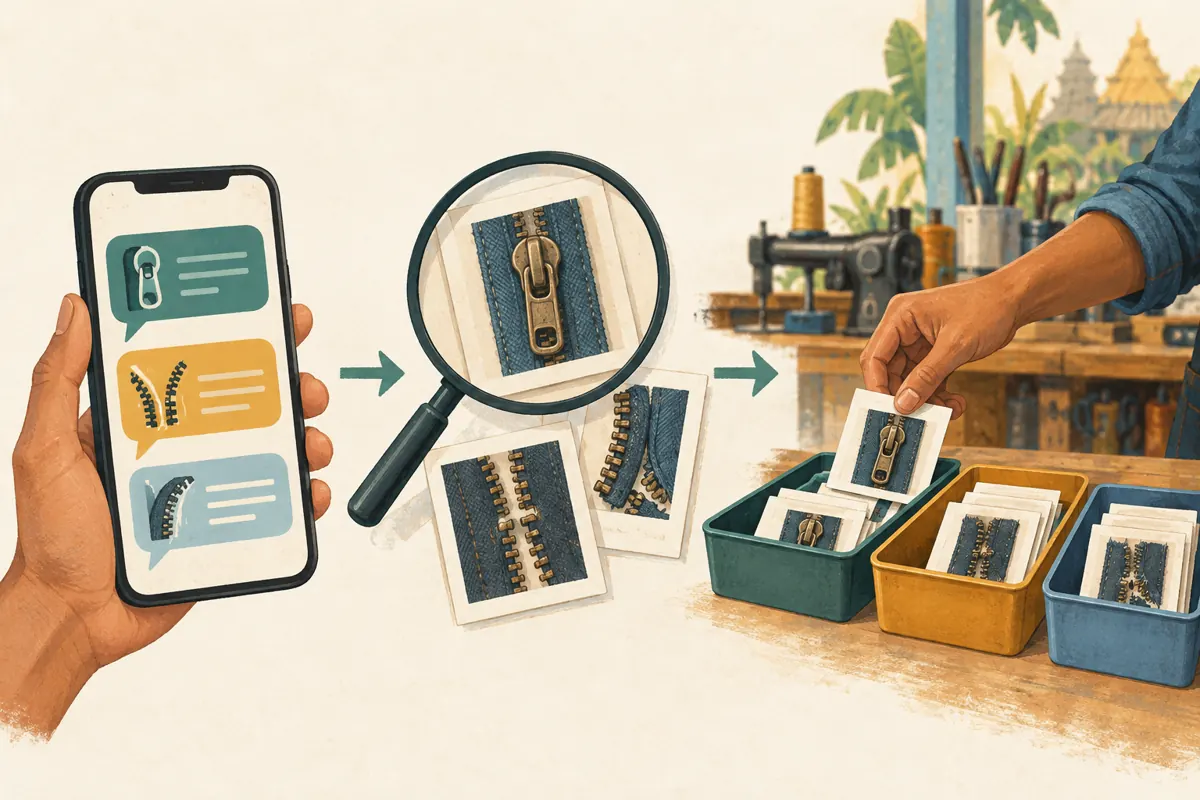
Separate explanation requests from booking enquiries
Create working categories that lead to different actions. A question about how a zipper works belongs in the explanation list. A question about accepted items, opening arrangements or bringing something for inspection belongs in the service-information list. A complaint about an earlier repair needs individual attention. A compliment can be acknowledged without being recorded as purchase intent.
For a hypothetical Siem Reap workshop, a viewer asking whether bags are accepted needs a direct service answer. That viewer should not have to wait for a new demonstration. Another viewer asking what the slider does could benefit from a close-up explanation that also helps future visitors.
Keep these categories as your shop's own review method. They are not claims about TikTok's built-in labels. One comment can require both a reply now and an idea for later content; record both actions when appropriate.
Choose the next demonstration by usefulness and certainty
Compare candidate topics using three questions. Does the misunderstanding prevent a useful enquiry? Can the shop explain it accurately with available samples? Will the answer remain useful beyond the current conversation? Choose a topic that satisfies all three before prioritizing the loudest or most flattering thread.
A single clear question can justify a demonstration. It does not establish market-wide demand, but it may expose a confusing detail that is inexpensive to explain. Conversely, repeated comments from one conversation do not necessarily represent several independent customers. Read the exchange before describing a question as widespread.
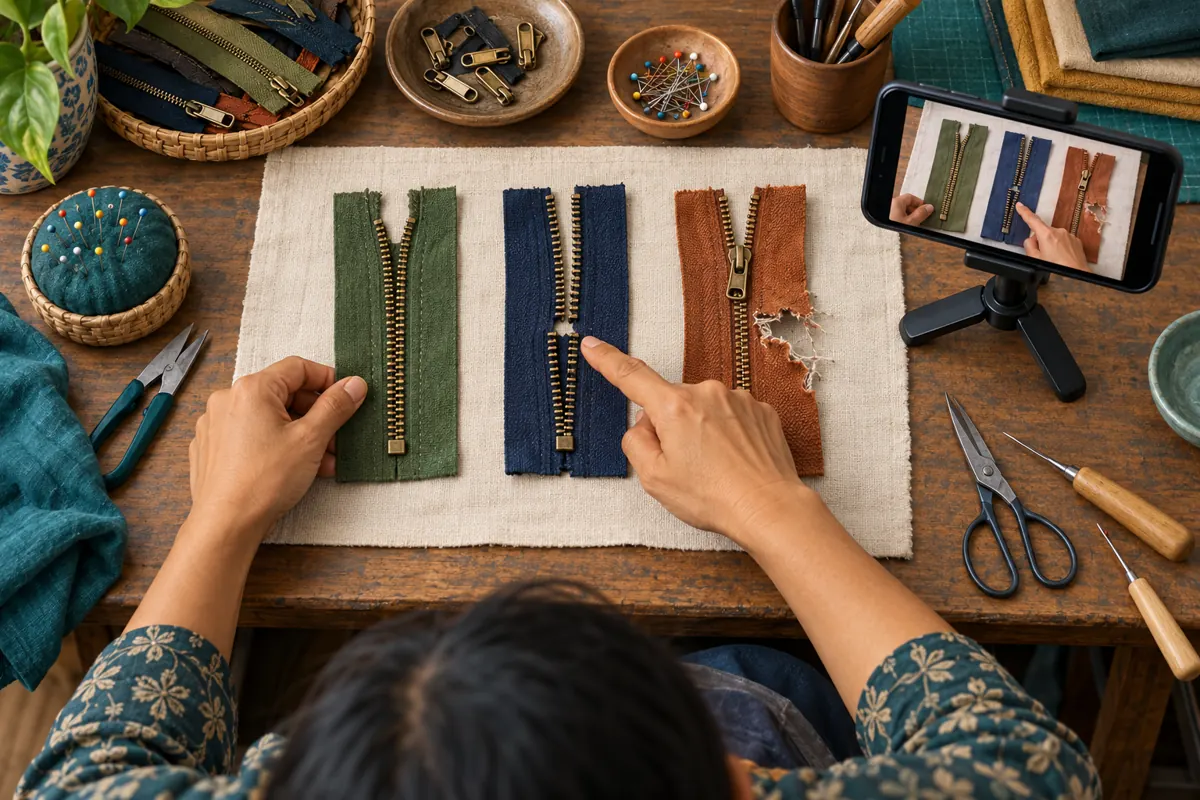
For the hypothetical zipper shop, identifying visible parts may be more useful than filming another complete repair. The owner could prepare examples of a missing pull tab, separated teeth and torn zipper tape. The purpose is to help viewers describe what they see, with an explicit reminder that the repair decision follows inspection.
Turn the verified question into a clear filming brief
Write a brief with the customer question, the sample to show, the explanation and the next step. Keep the demonstration focused on recognition rather than promising a diagnosis. Use shop-owned samples or items you have permission to show. Remove identifying tags, receipts and other personal details from the frame.
A hypothetical opening could explain that a missing pull tab and a zipper that separates are different descriptions. Show each sample steadily, point to the relevant area and use consistent terminology in speech and captions. Avoid switching between several names for the same part without explaining the connection.
Finish by telling viewers what information helps the shop assess an enquiry: item type, what happens when the zipper moves and a suitable close-up through the shop's established contact route. Do not imply that submitting a photo guarantees a quote or reserves workshop time.
Keep SMM-panel view records outside the question analysis
The supplied pay-smm.com catalogue includes the exact title “TikTok - Video Views ~ Max Unlimited ~ 10M/Days ~ Instant ~ 𝐍𝐎 𝗥𝗘𝗙𝗜𝗟𝗟”. It identifies a video-view listing, but no supporting description was supplied. The title alone does not verify speed, delivery conditions, audience origin or who watches.
A panel record cannot tell the repair shop whether viewers understood the difference between a pull tab and a slider. Purchased engagement is not evidence of genuine interest, sales, advertising delivery or Cambodian users. If earlier panel activity exists, retain it as separate context when reviewing the post. Do not blend its delivery record into a customer-enquiry total.
TikTok's official guidance prohibits services that artificially increase engagement. For this workflow, do not purchase activity to make a question appear popular or to manufacture support for a content decision. Direct replies and accurate demonstrations provide a practical basis for promotion without invented customer signals.
Review the follow-up through observable customer behaviour
After publishing the explanation, look for changes you can actually describe. Are people naming the affected part more clearly? Do enquiries include the item type? Are staff still correcting the same misunderstanding? These observations help improve the next explanation without requiring claims about algorithmic rewards.
Keep the review period consistent enough for your shop to manage, and note what you examined. If you read only the newest comments, say so internally. Record an enquiry as an enquiry, an arranged inspection as an arranged inspection and completed work only when it is confirmed in the shop's normal records.
Avoid declaring that the video caused an appointment unless you have a reasonable basis, such as the customer saying they came from that demonstration. Even then, the statement describes that customer's account. It does not prove that the same content will produce similar outcomes for other businesses.
Avoid shortcuts that weaken the review
Do not select only comments that support an idea you already wanted to film. Read questions that challenge the explanation as well as positive reactions. A viewer pointing out an unclear camera angle may provide a more useful production note than several compliments. Respond to the substance without treating criticism as proof of bad intent.
Do not turn every unresolved comment into a public screenshot. A generalized question often explains the issue without displaying a username, profile photo or personal circumstances. When quoting someone is genuinely necessary, consider permission and preserve the surrounding meaning.
Finally, distinguish correction from promotion. If the original demonstration misstates what the shop offers, correct that information before planning another promotional push. More attention will not resolve an inaccurate service claim. Assign one staff member to check the final explanation against actual workshop practice, then keep a brief note of the approved wording.

Frequently asked questions
Can we use this workflow without TikTok comment insights?
Yes. Read the comments directly and record the question, uncertainty and response needed. The main value comes from checking meaning and making a practical decision. For a small repair shop with a manageable conversation, a simple manual review may be sufficient.
Should we trust an English summary of Khmer comments?
Check the original wording before acting. Ask someone fluent in the customer's language to review the object, negative wording and nearby replies. Treat an unclear summary as a reason to investigate, rather than a diagnosis of what customers want or what repair their item needs.
How many comments are needed before making a demonstration?
There is no useful universal threshold for this editorial decision. One precise question may reveal something worth explaining. Choose based on the clarity of the problem, the usefulness of the answer and the effort required. Do not describe a single question as widespread demand.
Does a larger view count make the comment sample representative?
No. A view count does not establish who commented, where they live or whether they need a repair. Comments describe the people who chose to participate, with further uncertainty if their meaning is unclear. Purchased views add no proof that the questions represent Cambodian customers.
What should the shop do when a comment needs an urgent service answer?
Answer the practical question promptly through the appropriate channel. Confirm only what the shop knows, such as which items it accepts for inspection. Keep the content idea for later. A customer asking about an existing repair should receive individual attention rather than being treated mainly as material for promotion.
Explore the current service catalogue, create an account, or ask a specific question through support tickets.
- TikTok Help Center: Comment insights on TikTok
- TikTok Newsroom: How TikTok counters deceptive behaviour
Prepared with AI assistance. Illustrations explain the workflow and do not represent customer results.