
20/10/2026 19:05
Did Translate Change the Hinge Type? Telegram Offer Checks for Cambodian Hardware Shops

A translated supplier message can sound clear while leaving the most important buying question unanswered: which hinge is actually being offered? For a Cambodian cabinet-hardware shop, a mistaken product term can travel from an incoming Telegram message into a promotional caption, then into a customer's order. More attention will not resolve that ambiguity. This guide explains how to use Telegram translation as a reading aid, verify the offer against physical stock, and prepare a post customers can act on. It also explains where an SMM panel service fits into the decision—and why a larger view counter cannot establish that anyone understood the translated offer.
1. Start with the product distinction customers must understand
Consider a hypothetical Phnom Penh shop receiving a supplier message about concealed cabinet hinges. The message includes a photograph, a product code and a phrase that translates as “complete hinge.” The shop is preparing a Telegram promotion for local cabinet makers. Before writing the caption, the seller needs to establish whether “complete” means a hinge with its mounting plate, a pair of hinges, or a larger package containing screws.
Write down the specific question the promotion must answer. In this example, it is: “What exactly does the buyer receive for the stated unit?” Keep other distinctions nearby, including the hinge variant and any verified fitting requirements. A translation that sounds natural but leaves those points uncertain is not ready to become an offer. This makes the review manageable: staff are checking a buying decision rather than debating every word.
2. Choose individual-message translation for a focused check
Telegram distinguishes translation of individual messages from translation of entire conversations. Its official feature announcement says all users can select an individual message and choose Translate, while Premium users can translate whole chats, groups and channels through the translation bar. For one supplier offer, start with the individual message so the review stays attached to a specific piece of information. [Telegram translation features](https://telegram.org/blog/profile-pics-emoji-translations).
Telegram's Privacy Policy identifies the language settings as the place to enable translation services. Open those settings, enable the available translation option, then return to the message and inspect its action menu. Check the languages offered in your own app rather than assuming every staff member has an identical setup. If the required translation is unavailable, obtain a competent human translation; do not guess from the photograph. [Telegram Privacy Policy](https://telegram.org/privacy#8-4-translation-of-chats-channels-and-specific-messages-at-the-request-of-the-user).
Keep the original wording available alongside your working interpretation. Whole-chat translation can help with a long conversation, but the final product decision should still point back to the exact supplier statement being checked.
3. Separate language questions from product questions
Use a short review note with three fields: original term, working meaning and evidence still needed. A language question concerns what the supplier intended to say. A product question concerns whether that statement describes the stock you will sell. Asking a bilingual colleague to explain a phrase addresses the first question; checking the package, supplier documentation or physical item addresses the second.
For the hypothetical hinge offer, record “complete hinge” as unresolved until the supplier identifies its contents. Ask a concrete follow-up: “Does this package include the mounting plate shown in the photo?” If two variants share a similar name, request the exact product code and a distinguishing photograph. Avoid broad questions such as “Is this correct?” They invite agreement without showing which uncertainty needs resolving. Do not turn a supplier's uncertain answer into a confident public promise.
4. Protect codes, units and exclusions during rewriting
Treat product identifiers as reference strings. Copy a verified code carefully and compare it with the package or stock record before publication. Do not improve its spelling or substitute a similar-looking code because the translated sentence reads more smoothly. Keep units beside measurements, and state whether the selling unit is one piece, a pair or a package.
Negatives and conditions deserve a separate reading. Phrases such as “plate not included,” “available after confirmation” and “sample shown” change what a buyer can reasonably expect. In a hypothetical draft, “hinge set available” is inadequate if the photograph includes accessories sold separately. Rewrite it to identify the included components explicitly. If the original message does not establish a material, fitting dimension or compatibility claim, leave that claim out until verified. Translation cannot supply missing product evidence.
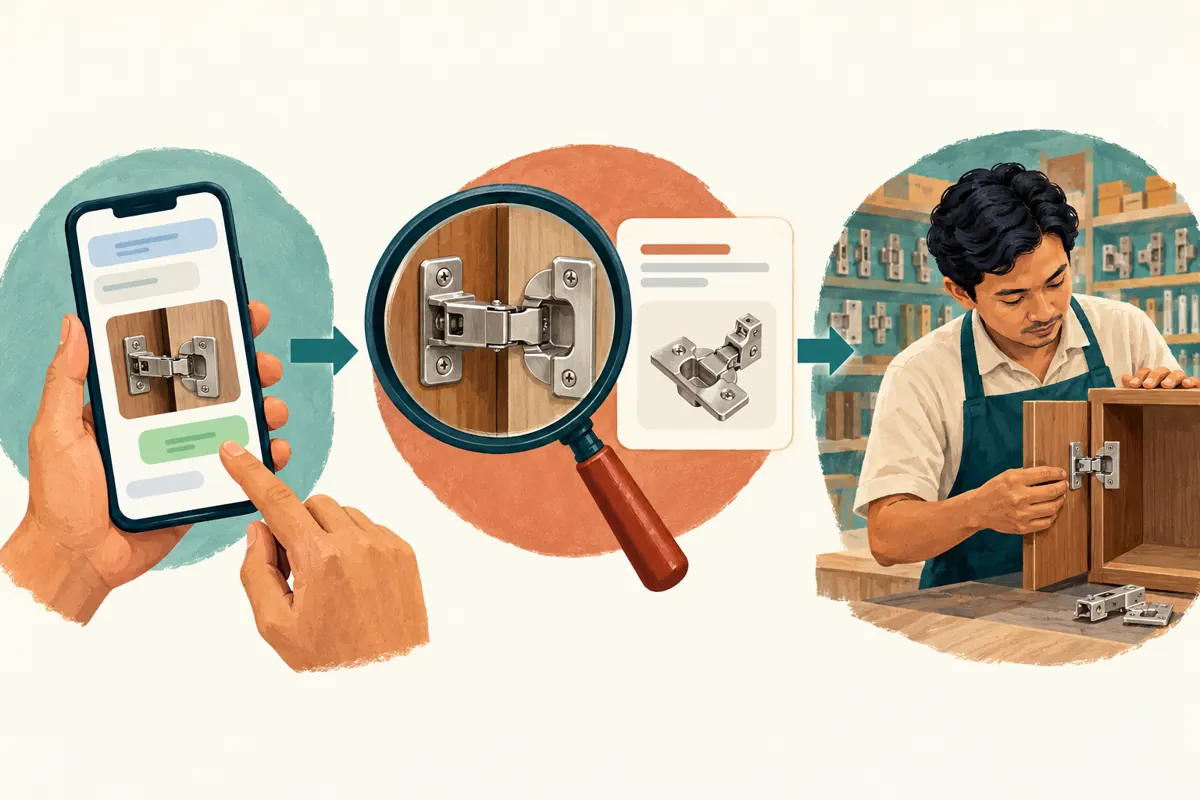
5. Check the package without letting the picture answer everything
Place the actual selling package beside the phone and compare its contents with the proposed offer. Photograph the hinge, mounting plate and other included components clearly enough that staff can identify them. Keep demonstration props separate from the sale contents. A cabinet door used to show movement should not make the offer look like a complete furniture assembly.
The illustrations accompanying this article explain the checking process; they are not product specifications. Apply the same distinction to your own promotional visuals. A sample photograph may show the right general product family while depicting a different variant. When the image and supplier wording disagree, stop the promotion and resolve the mismatch. Do not choose whichever version makes the offer more attractive. Record the confirmed answer so the person replying to enquiries uses the same description as the person preparing the post.
6. Write a Cambodian customer offer from confirmed facts
Draft the post for the language your intended customers use. A Cambodian shop serving Khmer-speaking cabinet makers should have its Khmer wording checked by someone who understands both the language and the products. An English supplier phrase can remain as a supporting identifier when useful, but it should not carry the entire explanation. Keep the product name, contents and next action easy to distinguish.
A hypothetical English working draft might read: “Cabinet hinge, product code H-A. Sold individually with the mounting plate shown. Screws sold separately. Send a photo of your existing fitting and its code before we confirm a replacement.” H-A is an invented example, not a real stocked item. Adapt the structure only after checking your own facts. Add the verified price and currency if publishing a price, and distinguish stock on hand from stock awaiting confirmation. Avoid copying the supplier's enthusiasm into unsupported promises.
7. Give a colleague a buying task, not a proofreading task
Ask a colleague who did not prepare the caption to identify the product and selling unit using only the draft. Then ask them to select the matching package from the shelf. This is more revealing than asking whether the wording looks good. Someone can approve fluent prose while still assuming a pair is included when the shop intends to sell one piece.
Use three practical prompts: “Which item would you pick?”, “What would the customer receive?” and “What still needs confirmation?” Record any disagreement and fix the caption before showing the colleague the explanation you intended. If possible, have the reviewer read the customer-language version directly. Translating your own draft back into another language can expose awkward wording, but matching translations do not independently verify the product. The physical stock and confirmed supplier details remain the reference.

8. Keep private order details out of translation tests
Telegram states that text selected for automatic translation may be shared with Google or Microsoft to obtain the translation. That is a practical reason to keep a product-language test focused on product information. Use a clean example instead of a customer conversation containing a delivery address, payment details or unrelated personal information. [Telegram Privacy Policy](https://telegram.org/privacy#8-4-translation-of-chats-channels-and-specific-messages-at-the-request-of-the-user).
For a hypothetical enquiry, staff can prepare a separate sentence such as “Does the mounting plate come with this hinge?” without including the customer's name or order history. Preserve enough surrounding product context to make the question understandable. If you remove so much context that the term becomes ambiguous, ask a knowledgeable colleague for help instead. The aim is a useful, limited language check, not distributing an entire conversation simply because one phrase is unfamiliar.
9. Decide whether an SMM service addresses the actual problem
The supplied pay-smm.com catalogue includes “Telegram - Post Views ~ 1 post ~ 𝐍𝐎 𝗥𝗘𝗙𝗜𝗟𝗟 ~ 100k/days ~ INSTANT”. Its name identifies it as a post-view offering, but the supplied description is empty. Treat the speed and other wording as catalogue labels rather than independently verified delivery facts. The brief does not establish audience location, translation support, genuine interest or official Telegram affiliation.
If customers cannot tell which hinge is being sold, a post-view service does not address the problem. Fix the offer first. If you later evaluate a service, check its current requirements, applicable platform rules and terms, and whether you can describe the expenditure honestly. Do not buy views to portray an uncertain product as popular. A reasonable decision may be to spend the available effort on clearer photographs or knowledgeable replies instead.
Purchased engagement is not evidence of sales, ad delivery, Cambodian users or customer understanding. Keep any panel delivery record separate from enquiries and confirmed orders, even when they concern the same promotional post.
10. Review understanding after the post goes live
Look for the questions people ask rather than treating the view counter as a comprehension score. Telegram explains that channel view totals are approximate and include views of forwarded copies. Those totals therefore cannot tell you how many local buyers correctly understood the package contents. [Telegram Channels FAQ](https://telegram.org/faq_channels#q-what-does-the-eye-icon-mean).
If enquiries repeatedly ask whether the plate is included, move that answer earlier in the caption and improve the photograph. If readers identify the correct variant but need help assessing their existing fitting, prepare a separate comparison guide using verified information. Record observations precisely: “Several enquiries asked about the plate” is useful; “The translation increased demand” requires evidence you may not have.
When an error affects an active enquiry, explain the corrected contents directly before confirming the sale. Update the public offer too, and record what changed for the next staff shift. Use the resolved misunderstanding to improve the shop's product vocabulary, so the next promotion starts with a clearer description.
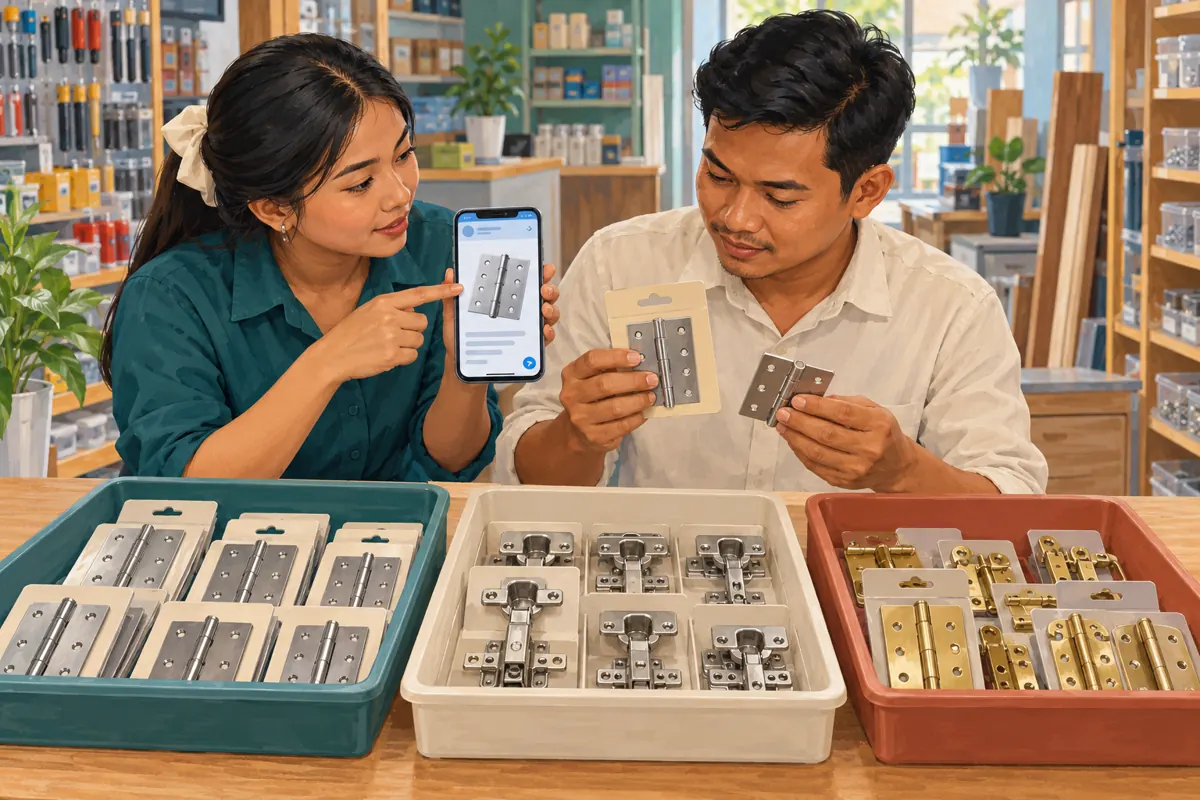
Frequently asked questions
Do we need Telegram Premium to check one supplier message?
Telegram's official announcement distinguishes individual-message translation, available to all users, from Premium translation of entire conversations. Start with one message for this workflow. Check the translation controls and available languages in your app before relying on them. [Telegram translation features](https://telegram.org/blog/profile-pics-emoji-translations).
What if the translation sounds right but the hinge photo looks different?
Pause the offer. Ask the supplier to match the exact code to a clear photograph and package description. Similar wording does not establish that two variants are interchangeable. Publish only the details you can reconcile with the item you intend to supply.
Should we publish the automatic translation directly?
Use it as a working interpretation. Have someone who understands the customer language and the hardware check the buying terms, then write the offer from confirmed facts. Fluent wording can still conceal uncertainty about quantity, included components, availability or fitting requirements.
Can more post views show that the translation is working?
No. A view does not establish comprehension, and purchased views cannot demonstrate genuine customer interest. Use a reader check before publication and review actual clarification questions afterward. Confirmed orders provide business evidence, but they still do not isolate translation as the cause.
What should a small shop save for the next promotion?
Keep a compact product note containing the verified code, preferred customer-language term, package contents, exclusions and confirming reference. Record who checked it and when. Recheck changeable facts such as availability instead of assuming an old approved caption remains accurate.
Explore the current service catalogue, create an account, or ask a specific question through support tickets.
- Telegram: Profile Photo Maker, Translating Entire Chats, Emoji Categories and More
- Telegram Privacy Policy: Translation of Chats, Channels and Specific Messages
- Telegram Channels FAQ: What Does the Eye Icon Mean?
Prepared with AI assistance. Illustrations explain the workflow and do not represent customer results.