
21/10/2026 20:27
Did the Caption Travel with the Sample? Telegram Forwarding Checks for Cambodian Curtain-Tieback Shops

A curtain-tieback photo can travel further than its explanation. A customer shares it with a family member, an installer passes it to a homeowner, or a shop assistant forwards it into an enquiry. The next reader sees an attractive pair of tassels but may miss that wall hooks cost extra, the colour is a sample, or the photograph shows a custom order. For Cambodian shops promoting through Telegram, checking what survives forwarding is a practical part of preparing useful content. Before considering an SMM panel service, make sure the shared message still answers the buyer’s basic question: what exactly is being offered?
1. Start with the misunderstanding you need to prevent
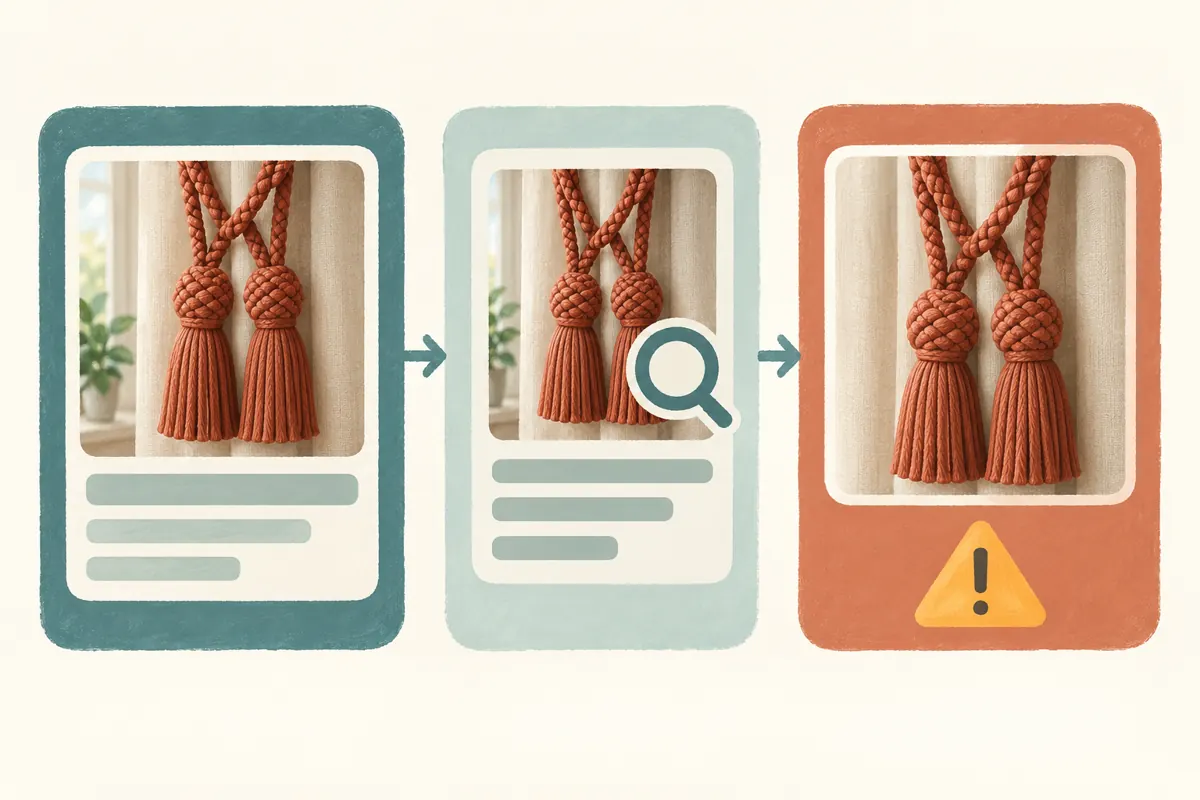
Consider a hypothetical curtain-accessory shop in Phnom Penh. Its channel photograph shows two braided tiebacks holding back a curtain, with a brass hook visible beside the window. The caption explains that the offer covers the tieback pair only. An assistant forwards the photograph without that caption. A recipient could reasonably assume the hook and fitting work are included.
The promotional problem is missing context. Write down the most costly misunderstanding before preparing the post: a single tieback versus a pair, decorative length versus usable loop length, or accessories versus installation. Make that distinction explicit in the message you expect people to share. A beautiful photograph should support the offer’s meaning rather than leave the buyer to reconstruct it.
2. Understand what Telegram’s forwarding preview controls
Telegram documents a forwarding preview opened by tapping the Forward Message label above the message bar. Its options include hiding the sender’s name, hiding media captions, deselecting messages and changing the recipient. These controls make the preview an important review point before sending. The official explanation is Telegram’s Live Streams, Flexible Forwarding, Jump to Next Channel, Trending Stickers and More announcement.
On the device your team actually uses, select the intended message, choose the recipient and inspect the available forwarding preview. Confirm the photograph, attached explanation and source presentation. Interface wording can differ, so avoid relying entirely on a memorised sequence of taps. If you cannot establish what will be sent, cancel the draft and review it before trying again.
3. Give each sample a caption that can stand alone
Build a compact caption around product identity, selling unit, important exclusions and the next question to answer. For a tieback sample, the useful details might be the design reference, whether it is sold individually or in pairs, which accessories are separate, and whether the customer needs to confirm colour or measurements. Keep essential conditions close to the product description.
A hypothetical English draft could read: “Braided tieback sample, design TB-A. Supplied as a pair; wall hooks and fitting are separate. Please send your preferred colour and a photo of the gathered curtain before requesting a quote.” Adapt the language to the actual customer, including Khmer where appropriate. Use only verified details, and replace the invented reference with your shop’s genuine product identifier.
4. Decide whether the photograph needs to change
A caption cannot repair every visual ambiguity. If the main photograph presents a hook, curtain and tiebacks as one complete set, buyers may retain that impression even after reading the description. Take a second product photograph showing the selling unit clearly. Place separately sold accessories apart from it, or show them in a distinct explanatory image.
Keep the styled photograph for demonstrating appearance, while using the product photograph to clarify contents. In a hypothetical Siem Reap workshop, an assistant might choose a flat photograph of the tieback pair when answering a contents question and a curtain display when discussing colour combinations. Select the image that answers the enquiry rather than forwarding every photograph automatically.
5. Keep attribution truthful when changing the presentation
Before altering source presentation, ask whose material this is and whether the shop has permission to use it. A supplier’s sample photograph should not become an implied photograph of stock on your shelf. A customer’s installation image should not become a public portfolio example without permission. Removing visible context does not change those underlying facts.
For your own approved product photographs, decide whether recipients need an explicit shop contact or catalogue reference in the accompanying explanation. For authorised supplier material, describe it as a supplier sample when that distinction matters. If the source caption includes limitations, preserve their meaning in any approved rewrite. Never remove attribution to suggest that another workshop’s work is your own.
6. Test what a fresh reader understands
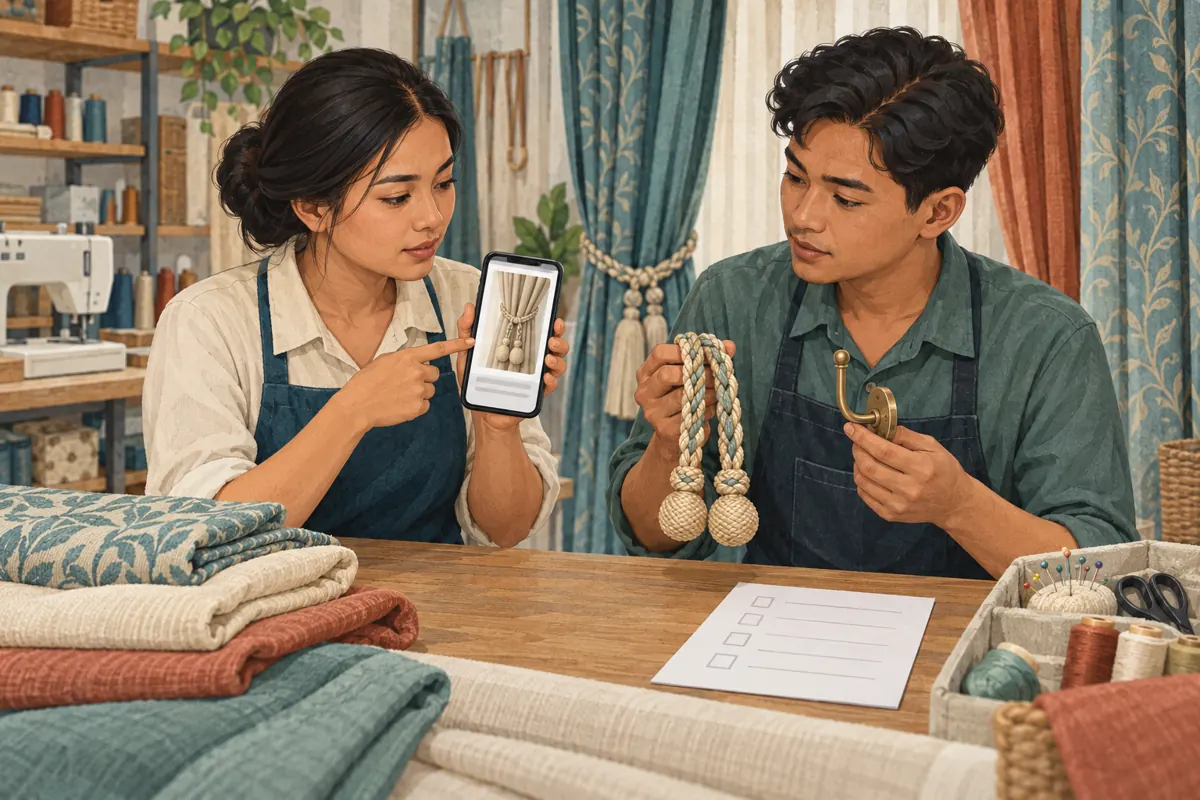
Use a colleague’s agreed test conversation before distributing an important sample. Ask the colleague to read only the received message and identify what is included, what remains unconfirmed and how to request the next step. Do not explain the answer first. The purpose is to discover what the message communicates without your spoken assistance.
Record the specific gap instead of a general judgement such as “looks fine.” If the colleague assumes installation is included, strengthen the exclusion or change the photograph. If they cannot tell whether the sample is available now, clarify availability. Repeat the check after a material revision. This small comprehension test is useful even when the final message contains no price.
7. Choose a complete forward, a new explanation or a pause
Use a complete forward when the existing sample is current, accurate and suitable for the recipient. Prepare a fresh explanation using authorised assets when the original mixes irrelevant information with essential conditions. Pause when stock, permission, product identity or included components remain uncertain. These choices depend on the quality of the information, not the urgency of the promotion.
For example, a hypothetical customer asks only whether a tieback suits a thick curtain. Forwarding an old promotional offer with an expired delivery promise creates unnecessary confusion. Send a current explanation of the relevant dimensions and request the missing curtain information. Avoid turning a general sample into a compatibility promise before someone qualified has checked the details.

8. Make shared samples useful for Cambodian enquiries
A sample may pass between relatives, decorators and the person paying for the order. Write so that someone outside the original conversation can understand it. Spell out the selling unit and measurement units. If quoting a price, identify the currency explicitly. Keep pickup arrangements and delivery conditions specific to what the shop can currently provide.
For a hypothetical enquiry moving between Phnom Penh and another province, separate product selection from transport confirmation. The sample can explain the tieback design while the reply establishes destination and delivery arrangements. Avoid promises such as “delivery included” unless they apply to that enquiry. When translating the explanation, pay particular attention to words such as pair, separate, sample and excluded.
9. Review an SMM listing without treating views as understanding
The supplied catalogue includes “Telegram - Post Views ~ 1 post ~ 𝐍𝐎 𝗥𝗘𝗙𝗜𝗟𝗟 ~ 100k/days ~ INSTANT”, service ID 22618. The title identifies a post-view service, but its description is empty. Treat the remaining wording as catalogue claims requiring clarification, not independently verified performance. The brief does not establish audience origin, genuine interest, detailed delivery terms or an official Telegram affiliation.
A view service cannot check whether a recipient understood the caption or knew that hooks were separate. Purchased engagement is not evidence of Cambodian users, sales, ad delivery or buyer intent. If evaluating the listing, resolve the target and terms first, assess applicable platform rules, and keep any delivery record separate from customer enquiries. Choosing no order is reasonable when the business need is clearer product communication.
10. Measure useful conversations and correct specific failures
Telegram’s Channels FAQ says channel counters include views from forwarded copies and that the figures are approximate. Accordingly, a rising counter alone cannot establish how many distinct local buyers understood the offer. For this workflow, keep a simple enquiry log: which sample was discussed, what information the customer supplied, what remained unclear and whether a quotation was actually requested.
Common mistakes include reviewing the original instead of the received message, placing an exclusion only in a separate follow-up, and assuming a view proves the recipient read the caption. When a misleading sample has already been shared, contact the known recipients with a clear correction identifying the affected product. Do not assume revising the source resolves every downstream copy; verify what the relevant customer now understands.
Frequently asked questions
Should we remove a long caption before forwarding a sample?
Only after deciding how the essential information will remain clear. If the caption contains the selling unit, exclusions or sample status, removing it can change the apparent offer. Prepare a shorter, accurate explanation using authorised material when necessary. Test that version as a complete message rather than relying on a later follow-up to supply missing conditions.
Can we forward a supplier’s photograph as an example?
Use it only with the necessary permission and describe what it represents. Explain whether it is a supplier sample, an item you can order or stock you have personally checked. Do not imply that the photograph documents your installation work. Confirm availability and specifications independently before using the image to support a customer quotation.
What if the customer shares only the photograph?
You cannot ensure that every recipient preserves your explanation. Reduce ambiguity through the photograph itself, keep the selling unit visually clear and use a recognisable product reference in the original message. When the customer returns, confirm the included items again before quoting. Treat their shared image as a starting point for clarification rather than a complete order specification.
Does a larger Telegram view count show that forwarding worked?
It may accompany wider circulation, but it does not prove comprehension or buying interest. Telegram describes channel view counts as approximate and includes forwarded-copy views. Look for actual enquiries that identify the sample and provide useful requirements. Even those enquiries remain separate from confirmed orders, and purchased views should never be presented as customer demand.
What should a small shop check when there is no second reviewer?
Inspect the forwarding preview, then read the proposed message as if you knew nothing about the product. Write down what a stranger could infer about quantity, accessories and availability. Compare those assumptions with the actual offer. For an uncertain technical claim or a costly custom order, wait for the responsible colleague’s confirmation before sending a promise.
Explore the current service catalogue, create an account, or ask a specific question through support tickets.
- Telegram: Live Streams, Flexible Forwarding, Jump to Next Channel, Trending Stickers and More
- Telegram Channels FAQ: What does the eye icon mean?
Prepared with AI assistance. Illustrations explain the workflow and do not represent customer results.